
Digital Product Passport: how companies can move from regulatory awareness to operational readiness
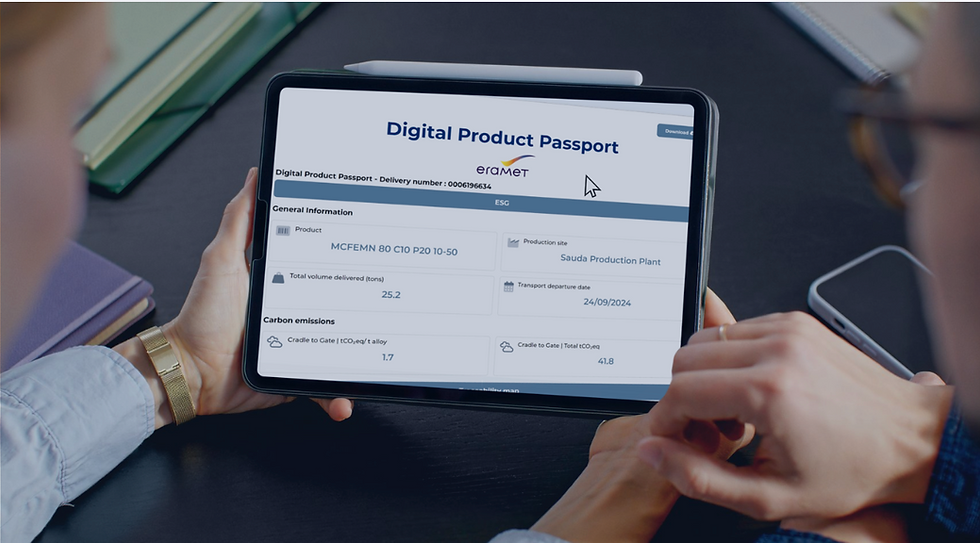
The Digital Product Passport (DPP) is rapidly moving from a regulatory concept to a strategic business capability.
As transparency requirements increase across global markets, companies will increasingly need to provide verified information about their products: where they come from, how they were produced, what materials they contain, and whether they comply with applicable requirements.
Much like individuals need passports to cross borders, products are progressively expected to carry a digital identity that enables them to circulate across markets and value chains.
While regulatory frameworks and technical standards are still evolving, one point is already clear: organizations need to start preparing now. The companies that build the right data foundations early will be better positioned to adapt, maintain market access, and turn DPP requirements into a competitive advantage.
Why Digital Product Passports matter
Digital Product Passports go beyond regulatory compliance. They represent a new way of structuring, managing, and exchanging product information across increasingly complex value chains.
A DPP connects product identity with information such as materials, provenance, certifications, manufacturing details, lifecycle events, and end-of-life instructions. Combined with dynamic, end-to-end traceability, it creates a reliable foundation for understanding products and supply chains over time.
This foundation enables organizations to move beyond fragmented data and unlock capabilities such as:
improved supply chain visibility;
stronger due diligence and risk management;
faster compliance across multiple regulations;
better supplier collaboration;
improved sourcing and product design decisions;
support for circular economy initiatives.
The challenge: moving from DPP strategy to execution
Understanding the concept of DPPs is only the first step. The real challenge is making them operational.
Companies need to answer practical questions:
What product/supply chain data is required today, and how easily can our DPP system adapt when those requirements change?
Where does this data currently exist across the organization and supply chain?
How can supplier data be collected, validated, and maintained?
What technology architecture can support DPP requirements at scale?
How should existing systems such as ERP, PLM, and supply chain platforms be integrated?
What governance model is required to ensure data quality and accountability?
DPP implementation is therefore not only a technology project. It requires alignment between data, processes, systems, suppliers, and business objectives.
Designing the right DPP system foundation
A scalable DPP system requires several core capabilities:
Data readiness and governance
Organizations must establish clear ownership of product data and ensure that information is accurate, traceable, and continuously updated.
Interoperability and integration
DPP systems must exchange information seamlessly across organizations, platforms, and borders. Interoperability is essential to enable end-to-end traceability and avoid isolated data silos.
Supplier and value chain integration
Because product information is distributed across multiple tiers, companies need scalable approaches to collect and manage data from suppliers with different levels of digital maturity.
Adaptability over time
DPP requirements will evolve as regulations expand, products change, and markets develop. Systems must therefore be designed for flexibility rather than one-off compliance.
From readiness assessment to execution
The path toward DPP implementation starts with understanding the current state.
Organizations need to assess:
existing data availability and quality;
supply chain visibility;
regulatory exposure;
technology capabilities;
supplier readiness;
governance maturity.
From there, companies can define the right execution model, whether through internal capabilities, external partners, or a combination of both.
The objective is not simply to create a Digital Product Passport. It is to build an operational capability that can support evolving requirements and create value over time.
Download the Digital Product Passport Executive Guide
To help organizations navigate this transition, we created the Digital Product Passport Executive Guide: Understand. Design. Execute.
The guide provides a practical framework covering:
DPP fundamentals and regulatory context;
core data requirements (at time T);
system architecture and design principles;
readiness assessment;
execution considerations.

Because the future of DPPs will not be defined by who understands the concept first, but by who can make it work at scale.
And if you're behind, don't panic...but don't wait either. Our team supports companies in assessing readiness, structuring traceability capabilities, and building the operational foundations required for successful DPP implementation.


Comments